There are teachers whose influence reaches beyond the limits of the courses they teach. Sometimes, simply crossing paths with them is enough...
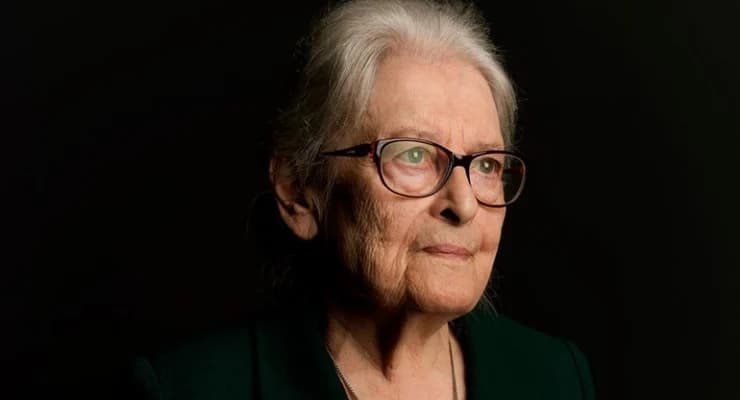
İoanna Kuçuradi was such a teacher for me. I never had the opportunity to take one of her courses, but I did have the chance to meet her. Our first encounter took place in the corridors of an unfamiliar faculty when I began my double major.
I do not think being a teacher is limited to conveying academic knowledge. A teacher should also be able to show how to approach a concept or a problem, how carefully to think before using a word, and why we sometimes need to stop and reconsider a subject about which we feel completely certain.
Remembering her today only as one of Türkiye's important philosophers feels incomplete to me. She undoubtedly left behind a powerful academic legacy: books, concepts, and decades of intellectual work on human rights and ethics. Yet something is often overlooked. Beyond all this, Professor Kuçuradi embodied an attitude toward the seriousness of thinking, and I believe this is one of the least discussed aspects of her legacy.
Talking about ethics is easy; possessing ethical knowledge is difficult
Today we hear the word ‘ethics’ almost everywhere. It is on everyone's lips, yet it is often used without filling the concept with meaning, like a label circulated by popular culture.
AI ethics, media ethics, research ethics, business ethics, advertising ethics, data ethics...
I think that as the word's field of use expands, its meaning erodes at the same pace.
That is why something Professor Kuçuradi said in a recent interview was so striking:
‘The word ethics has become fashionable, not ethical knowledge.’
This sentence deserves long and careful thought.
Today, ethics often circulates as a ready-made label for evaluating behavior. When we call something ‘unethical,’ we feel as though we have resolved the matter. Yet ethics is not simply about distributing labels of right and wrong. It concerns knowing what we are evaluating, by which standard, and through which understanding of the human being.
I think one of the strongest impressions Professor Kuçuradi left on me was precisely this: Do not consume concepts too easily.
Knowing a word is not the same as carrying knowledge of the concept it names.
When I consider how rapidly we consume concepts on social media, in academia, in institutions, and even in everyday arguments, this distinction seems more important than ever.
The question of human value
When we look at the center of Professor Kuçuradi's thought, we repeatedly encounter the human being.
But this is not a romantic or abstract ‘love of humanity.’
What is at stake is the philosophical grounding of the relationship among human value, human possibilities, individual actions, and human rights.
The important aspect of this approach is that it compels us to think of human rights not only as rights we demand from others, but also as responsibilities concerning how we should treat others.
I think this statement summarizes her way of thinking very well.
It is easy to speak of rights.
What is difficult is sustaining, in our own actions, the conduct those rights require.
Perhaps this is exactly where ethics and responsibility meet.
Fearing ourselves, not artificial intelligence
As someone who studies human-technology relations, what Professor Kuçuradi said about artificial intelligence is especially important to me.
When she was asked in a 2026 interview, ‘Should we be afraid of artificial intelligence?’ her answer was very clear:
‘We should be afraid not of artificial intelligence, but of ourselves.’
This single sentence shifts a large part of the debate about technology onto different ground.
Today we debate whether AI will manipulate people, take away our jobs, make us dependent, or one day escape human control.
I believe these are important questions.
But perhaps we turn technology into the subject of action a little too easily.
The algorithm directs.
Artificial intelligence deceives.
The system creates dependence.
The machine decides.
Yet there are still human beings behind all these systems.
People who design them, determine their purposes, choose which data to collect, and decide which limits will or will not be imposed...
For this reason, Professor Kuçuradi's statement in the same interview that technological developments can be used both to protect and to squander values is important. In her view, tools should not be turned into ends.
This idea may be one of the things we need most in today's debates about artificial intelligence.
The issue is not only what artificial intelligence can do.
It is what we choose to do with it.
The line between human and machine
Another point Professor Kuçuradi emphasized in discussions of AI was the language we use.
She said that the word ‘intelligence’ can easily lead us toward anthropomorphism.
This subject is also very familiar within my own work.
When talking about AI systems today, we readily use expressions such as ‘knows,’ ‘understands,’ ‘thinks,’ ‘remembers,’ and even, at times, ‘feels.’
Language does not merely describe reality here.
It also shapes how we perceive reality.
Perhaps we trust it more.
Perhaps we take its advice more seriously.
Perhaps, after a while, we begin to attribute human qualities to the relationship we form with it.
As someone who studies human-technology relations, I encounter these questions with increasing frequency.
The moment we call a system ‘intelligent,’ our relationship with it can begin to change. Indeed, even the official adoption of the expression ‘Superintelligence’ in the United States in place of ‘artificial intelligence’ demonstrates how decisive language can be in this relationship.
I see such labels as part of a tendency to extend the boundaries of concepts that belong to human beings ever further into technology.
What remains after a teacher?
In academia, we sometimes describe a teacher's legacy through publication counts, books, institutions they founded, or students they trained.
All of these are undoubtedly important. But sometimes a single sentence remains after a teacher, and it can occupy an important place in your life.
Perhaps this is the most powerful aspect of teaching.
A person never knows what a student will remember years later.
Yet some thoughts settle quietly within us.
Years pass.
Your field changes, the subjects you study change, and the world's problems change.
Then one day you encounter an issue that seems entirely new.
Like artificial intelligence.
And when you look back, you see that the thoughts of a teacher you encountered years before are still there:
What is a human being?
What is value?
What makes an action valuable?
And what is our responsibility within all of this?
Perhaps this is exactly the legacy great teachers leave behind.
They do not leave you all the answers.
But you carry the right questions with you for many years.
What remains with me from Professor İoanna Kuçuradi is something like this.
With respect, gratitude, and longing...
Share this article
References
- Atalay, F. (2026, 7 Şubat). Filozof Prof. Dr. İoanna Kuçuradi ile hayat ve gelecek üzerine konuştuk: ‘Yapay zekâdan değil kendimizden korkmalıyız’. Cumhuriyet. https://www.cumhuriyet.com.tr/yasam/filozof-prof-dr-ioanna-kucuradi-ile-hayat-ve-gelecek-uzerine-konustuk-yapay-zekadan-degil-kendimizden-korkmalıyiz-2476682
- Cumhuriyet. (2026, 4 Ekim). İoanna Kuçuradi bugün son yolculuğuna uğurlanıyor: İnsan hakları ve felsefeye adanan bir ömür. https://www.cumhuriyet.com.tr/turkiye/ioanna-kucuradi-bugun-son-yolculuguna-ugurlaniyor-insan-haklari-ve-felsefeye-adanan-bir-omur-2543483
- International Commission against the Death Penalty. Ioanna Kuçuradi. https://icomdp.org/comission/ioanna-kucuradi-2/